
HANA News Blog

Performance issues with THP on multi-NUMA node systems

Jens Gleichmann • 30. März 2026

THP issues with kernels before February 2026
affected by THP bug

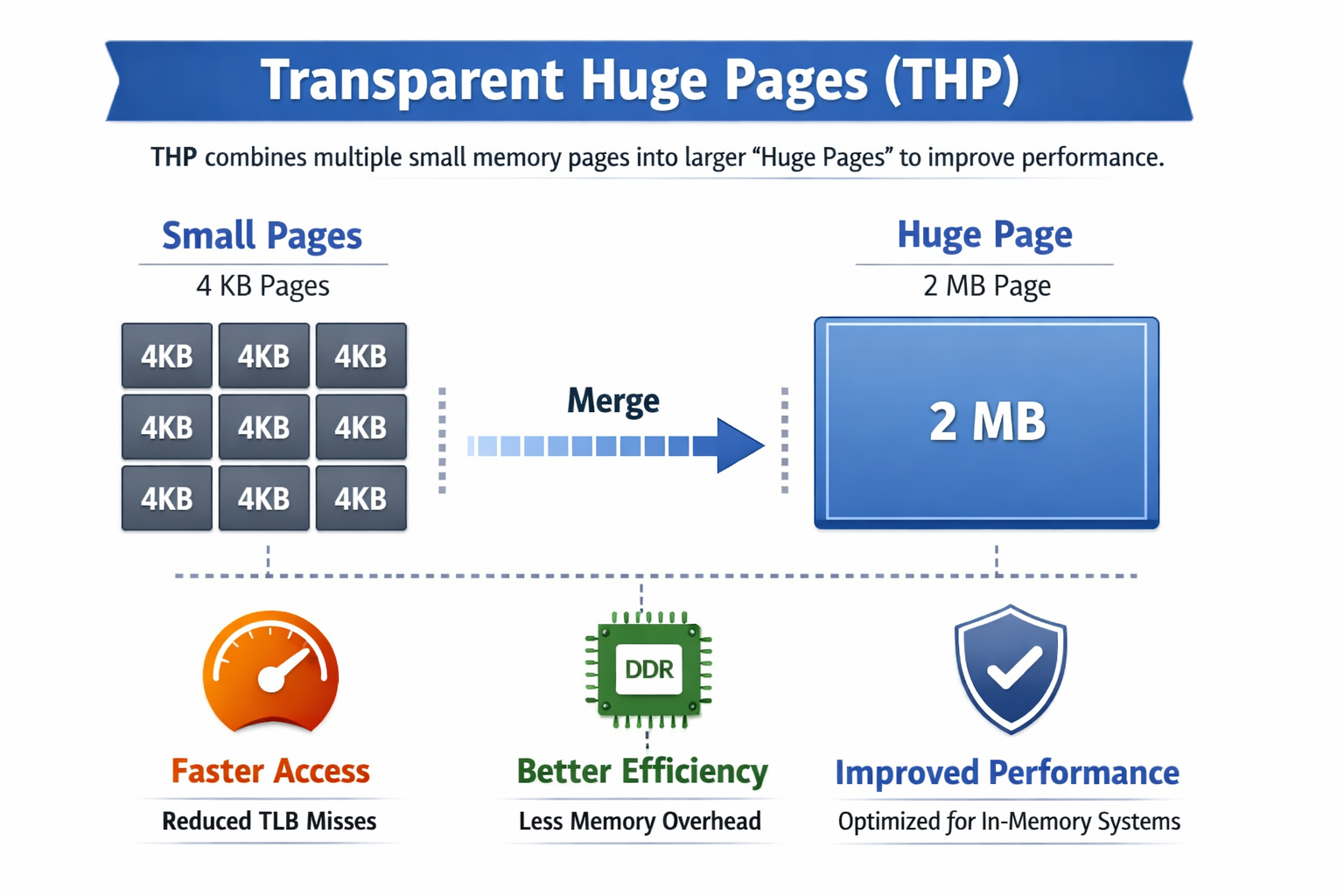
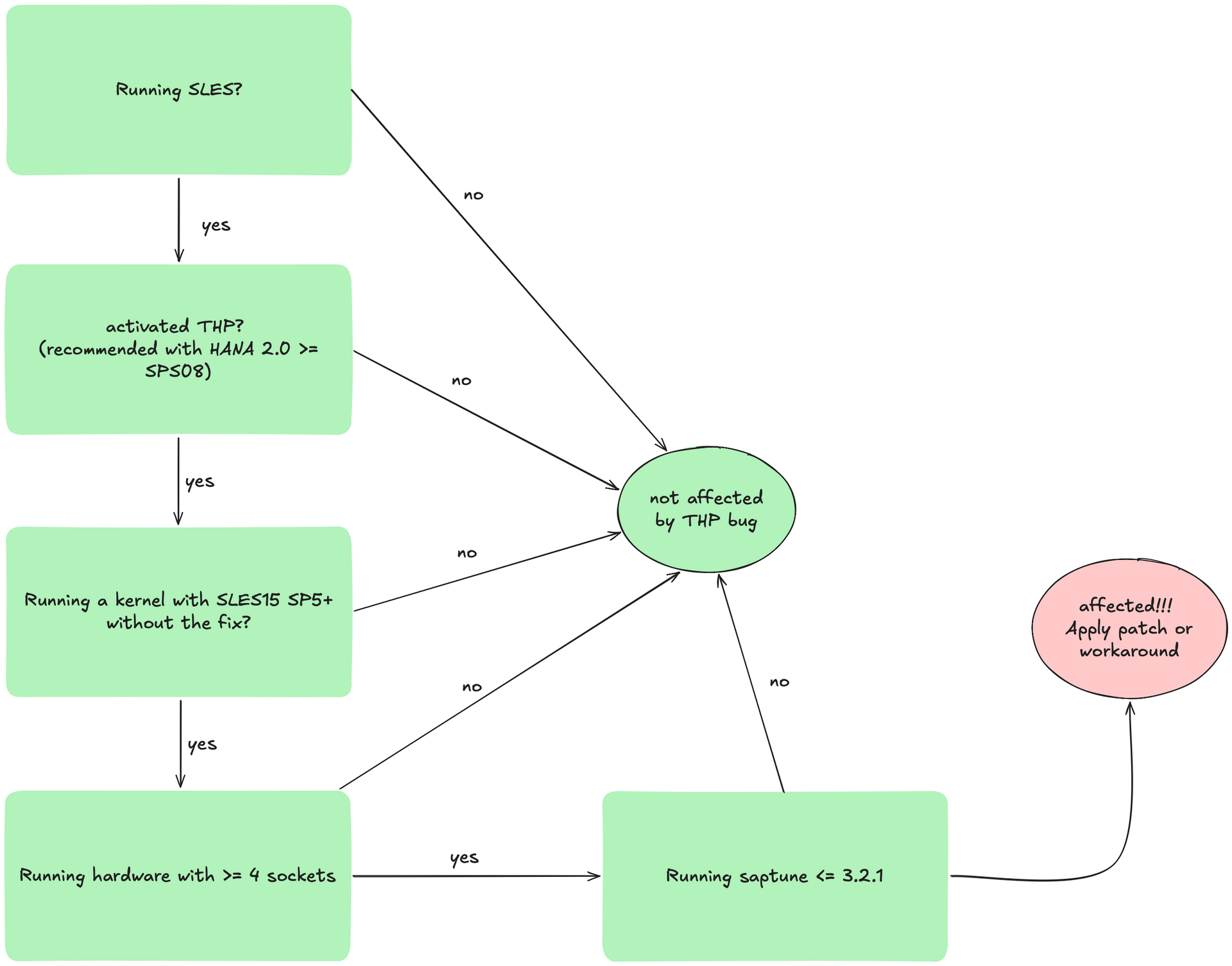
We have multiple customers running systems on hardware with multiple sockets (4+) and with SLES as OS. With the latest change of SAP HANA 2.0 SPS08 to support THP this can cause some trouble with the usage of SLES 15 SP5 and higher.

The SUSE SUSE KBA 22286 describes this problem in detail.

Who is affected?

  • Customers running HANA 2.0 SPS08
  • Customer running hardware with more or equal than 4 sockets
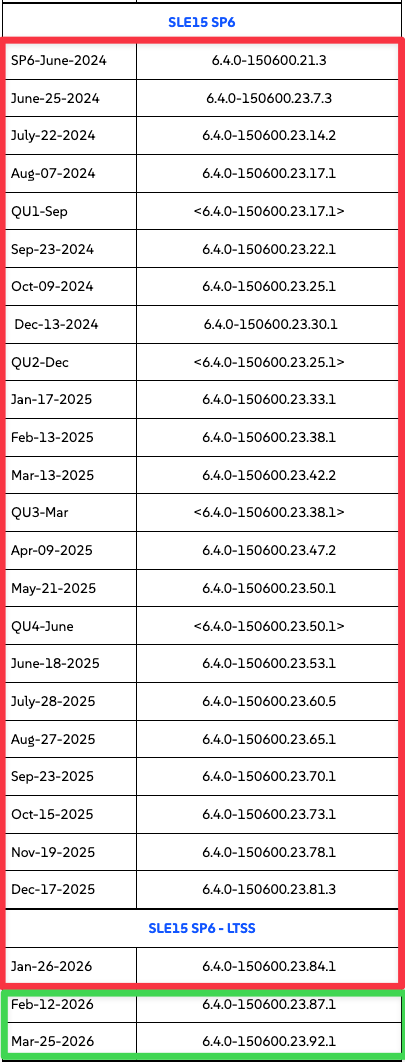
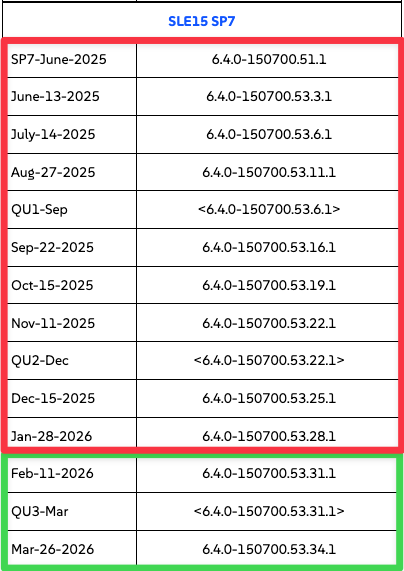
  • SLES 15 SP5 / SLES for SAP 15 SP5 < kernel-default-5.14.21-150500.55.136.1 (Feb-12-2026: kernel-default-5.14.21-150500.55.136.default)
  • SLES 15 SP5 / SLES for SAP 15 SP6 < kernel-default-6.4.0-150600.23.87.1 (Feb-12-2026: kernel-default-6.4.0-150600.23.87.default)
  • SLES 15 SP5 / SLES for SAP 15 SP7 < kernel-default-6.4.0-150700.53.31.1 (Feb-11-2026: kernel-default-6.4.0-150700.53.31.default)
  • Customer running a lower version of saptune 3.2.2


Customers which are regularly patching there systems are fine. The new kernel versions released in February 2026 are including the fix. But please keep in mind even if you are patching you systems and still running saptune 3.2.2 you have to manually revert the workaround. This version of saptune is just implementing the workaround independent of the used kernel version. Beginning with saptune 3.2.3 (not yet released, status of 30-03-2026) it will include an automatic check.

After installing the fixed kernel and rebooting, defrag should remain ON (madvise) as per the SAP-recommended settings in SAP Note 2131662:

/sys/kernel/mm/transparent_hugepage/defrag => madvise
/sys/kernel/mm/transparent_hugepage/enabled => madvise
/sys/kernel/mm/transparent_hugepage/khugepaged/defrag => 1


How you can check if you are affected? You observe performance issues, memory imbalance and with it memory pressure for selective nodes. As result THP allocations can trigger unexpected direct reclaim and compaction/memory defragmentation, even though other NUMA nodes may have plenty of free memory.

# cat /sys/devices/system/node/node*/meminfo | grep MemFree
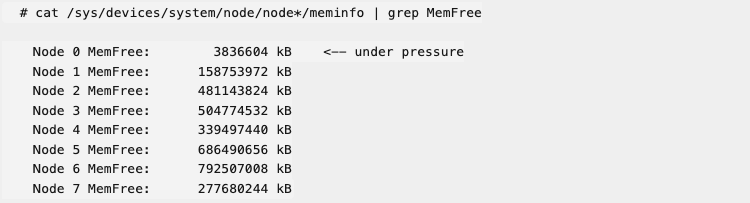
This imbalance where one node is low on memory while others have plenty of free memory is what triggers the problematic direct reclaim behavior.


This issue became prominent starting with SLES 15 SP5 and HANA 2 SPS08, when SAP Note 2131662 changed the recommendation to enable THP with "madvise". Prior to SLES 15 SP5, SAP HANA systems had THP disabled entirely. If your system shows [never] for THP, no action is needed:

Temporary workaround for systems not yet updated to the fixed kernel:

If the system cannot be updated to the fixed kernel yet and the symptoms described above are observed, disable THP defragmentation while preserving opportunistic THP usage. This can be done manually or via saptune.


Manual (applied live, no reboot, no HA cluster or HANA restart required):

# echo "never" > /sys/kernel/mm/transparent_hugepage/defrag

# echo 0 > /sys/kernel/mm/transparent_hugepage/khugepaged/defrag


Saptune 3.2.2+ ships Note HotFix000022286 as part of the Solutions HANA, NETWEAVER+HANA, S4HANA-APP+DB and S4HANA-DBSERVER. To apply:

# saptune note apply HotFix000022286

# saptune verify applied


Why NUMA node 0 is often affected first:

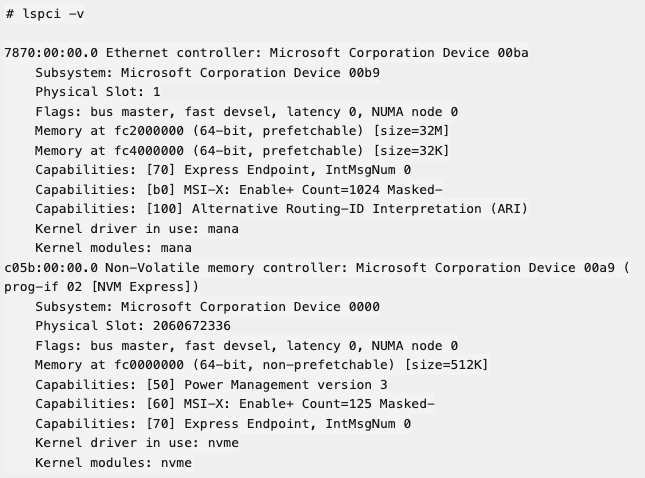
NUMA node 0 often experiences a disproportionate impact because PCI devices, such as those for LAN or DISK, are frequently configured to point to it, and user-space applications often default their installation to this same node. Consequently, all requests for LAN or DISK from other NUMA nodes will be routed through NUMA node 0 if that's where the necessary drivers are configured.

 To review your driver configuration:
Kernel versions
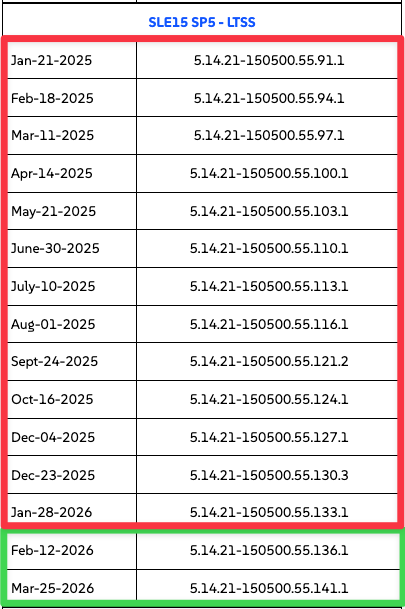
Sources:

SUSE KBA 22286: SAP HANA swap and system hangs with THP on multi-NUMA node systems

saptune 3.2.2: Github

SAP Note 2131662 - Transparent Huge Pages (THP) on SAP HANA Servers

SAP Note 2578899 - SUSE Linux Enterprise Server 15: Installation Note

SAP Note 2684254 - SAP HANA DB: Recommended OS settings for SLES 15 / SLES for SAP Applications 15

SAP HANA News by XLC

Transparent Huge Pages (THP) with madvise can trigger high swap usage and performance issues
von Matthias Sander 26. Januar 2026
Transparent Huge Pages (THP) with madvise can trigger high swap usage, performance issues, or even system hangs on multi-NUMA systems.
HANA performance degradation after upgrade to SPS07+SPS08
von Jens Gleichmann 9. Januar 2026
With SPS06 and even stronger in SPS07 the HEX engine was pushed to be used more often. This results on the one hand side in easy scenario to perfect results with lower memory and CPU consumption ending up in faster response times. But in scenarios with FAE (for all entries) together with FDA (fast data access), it can result in bad performance. After some customers upgraded their first systems to SPS07 I recommended to wait for Rev. 73/74. But some started early with Rev. 71/72 and we had to troubleshoot many statement. If you have similar performance issues after the upgrade to SPS07 feel free to contact us! Our current recommendation is to use Rev. 74 with some workarounds. The performance degradation is extreme in systems like EWM and BW with high analytical workload.
SAP HANA NSE - a technical deepdive with Q&A
von Jens Gleichmann 24. November 2025
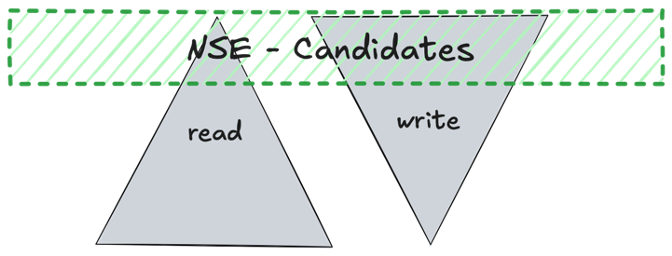
SAP NSE was introduced with HANA 2.0 SPS04 and based on a similar approach like data aging. Data aging based on a application level approach which has a side effect if you are using a lot of Z-coding. You have to use special BADI's to access the correct data. This means you have to adapt your coding if you are using it for Z-tables or using not SAP standard functions for accessing the data in your Z-coding. In this blog we will talk about the technical aspects in more detail.
Partitioning process
von Jens Gleichmann 24. November 2025
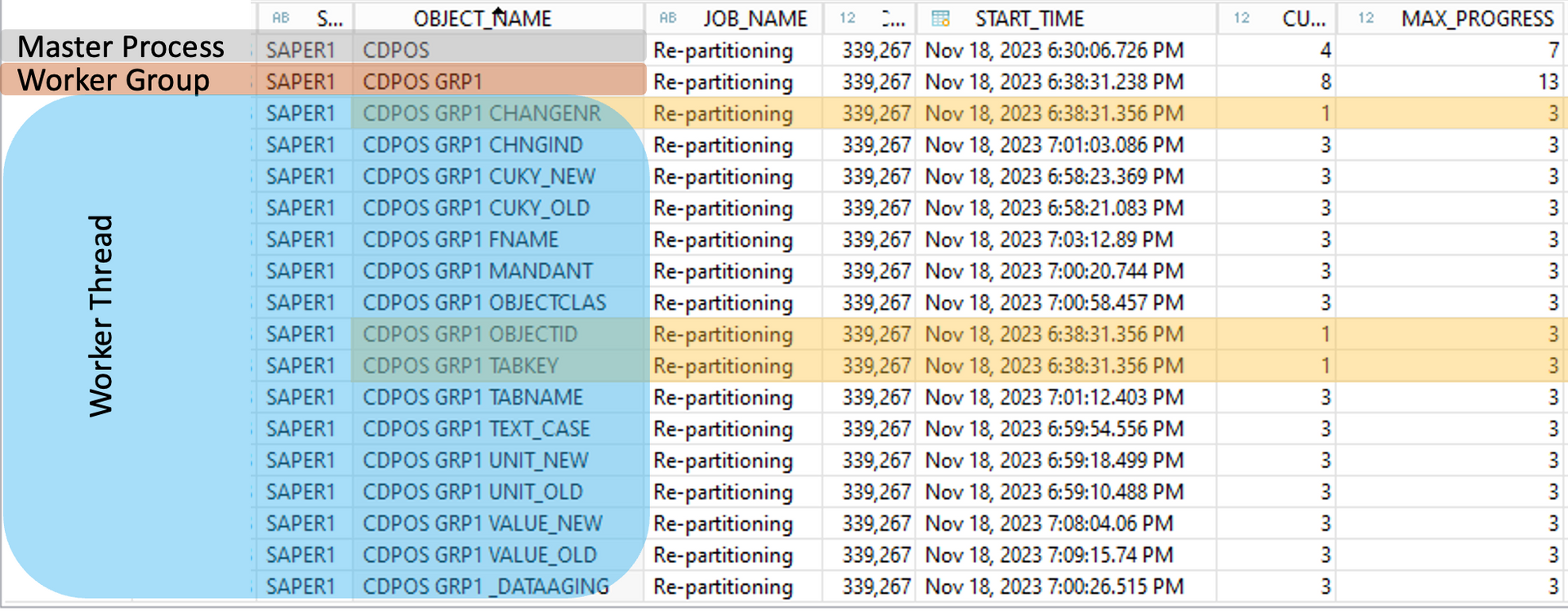
SAP HANA scaling and tuning with proper partitioning designs
R+R: intersection and missing services
von Jens Gleichmann 25. September 2025
In transformation projects like SAP RISE / SAP Cloud ERP, the Roles & Responsibilities (R+R) list often serves as the backbone for collaboration between customer, partner, and SAP. Yet too often, this list is treated as a static document rather than a living framework. Sometimes nobody knows exactly what was defined by
Why Databases Need Optimizer Statistics – With a Focus on SAP HANA
von Jens Gleichmann 28. Mai 2025
In the world of modern database management systems, query performance is not just a matter of hardware—it’s about smart execution plans. At the core of generating these plans lies a critical component: optimizer statistics. This article explores why databases need optimizer statistics, with particular emphasis on SAP HANA, while drawing parallels with Oracle, Microsoft SQL Server (MSSQL), and IBM DB2.
HANA OS maintenance
von Jens Gleichmann 27. Mai 2025
Please notice that when you want to run HANA 2.0 SPS07, you need defined OS levels. As you can see RHEL7 and SLES12 are not certified for SPS07. The SPS07 release of HANA is the basis for the S/4HANA release 2023 which is my recommended go-to release for the next years. Keep in mind that you have to go to SPS07 when you are running SPS06 because it will run out of maintenance end of 2023.
The HANA Optimizer is one of the core components of the HANA database. It determines how SQL is exec
von Jens Gleichmann 25. Mai 2025
A database optimizer behaves similarly to the navigation system in your car. You use various parameters to determine which route you want to take to reach a particular destination. Potential additional costs for tolls and ferries also play a role, as do other limitations such as the vehicle's height, length, and width. From these input parameters, the navigation system determines the optimal route based on current traffic information (traffic volume, construction sites, congestion, accidents, closures, etc.), weather conditions, and the length of the route. This means that with exactly identical input parameters, different routes, costs, and thus different travel times can arise depending on the given conditions.
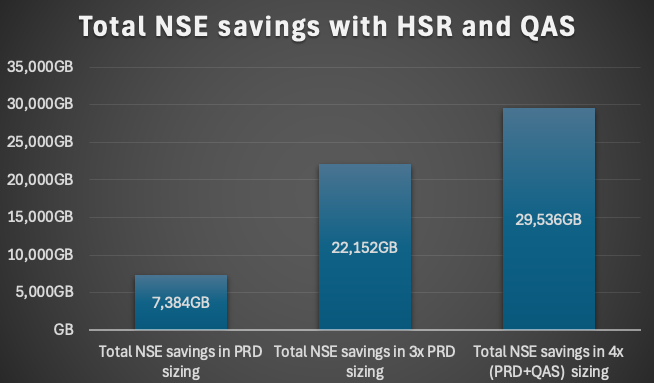
Is NSE worth the effort or is the better question: Do you know your cost per GB of RAM?
von Jens Gleichmann 18. April 2025
Most of our presentations on data tiering projects end with these typical questions: How much we will save? How fast can it be implemented? Is the effort worth it over time? My counter question: "Do you know how much 1 GB of memory costs your company per month or year?" => how much memory we have to save to be beneficial?
Buch: SAP HANA Deepdive
von Jens Gleichmann und Matthias Sander 30. März 2025
Unser erster Buch mit dem Titel "SAP HANA Deepdive: Optimierung und Stabilität im Betrieb" ist erschienen.
more