
HANA News Blog
HANA Performance Check
HANA performance - one of the most discussed topics
The topic of HANA performance is one of the most discussed topics in nearly every single SAP project we are involved. Performance has always been an important aspect in general; however, particularly when switching databases or application releases - whether moving from anyDB to HANA or, more specifically, from ERP on anyDB to S/4HANA - topics such as testing and performance increasingly take center stage as the go-live date approaches. It not only how we can test the productive load, it is more and more the question how we can compare and optimize it? Also the migration or conversion time falls under the aspect performance.
In the last years we faced many performance issues in different scenarios and we developed a tool-set to create performance reports. We identify business critical workload, rate and prioritize it. We optimize the statement on DB level or map it to special workload classes. If this finally not solve the issue we are working with strong partners to optimize the logic, because we are techies and not developers ;)
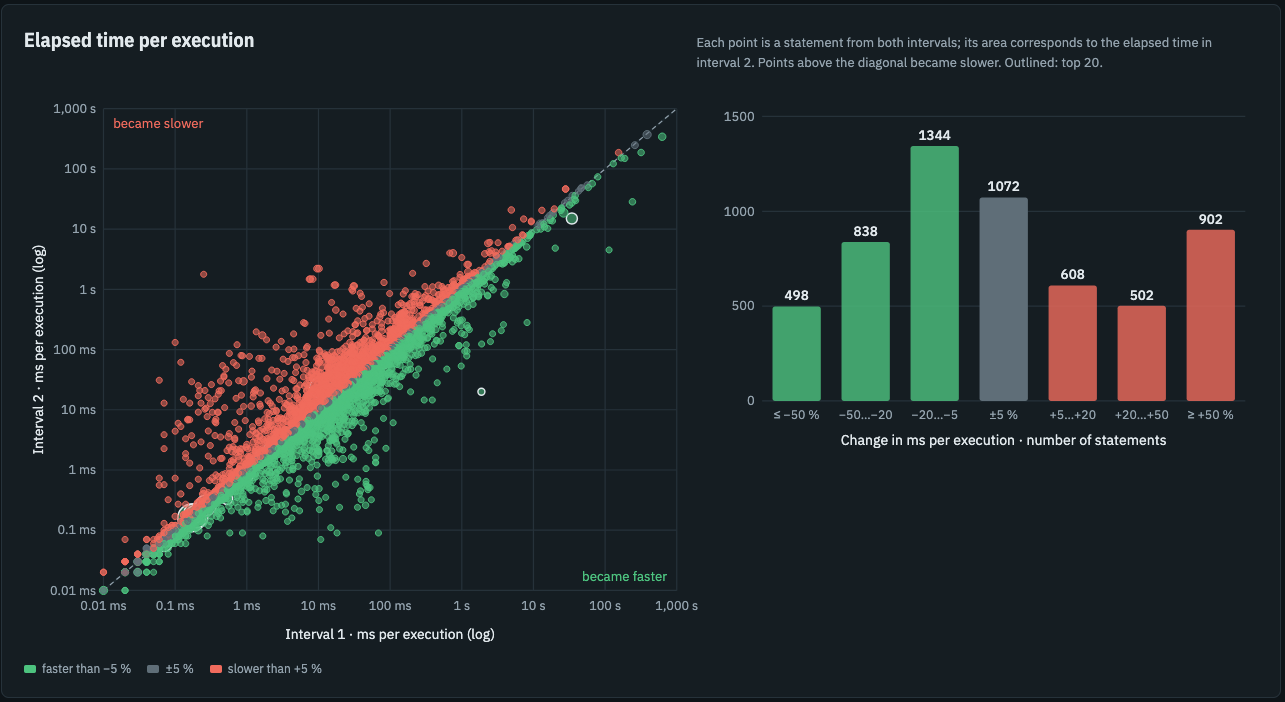
Here is a sneak preview of one performance report which was made for a HANA DB revision update (target 89.05). In the last years we faced many issues due to strange behavior of the HANA optimizer regarding e.g. the new standard SQL engine HEX. We are not only focusing on pure SQL runtime even more we have a look on different aspects of the runtime:
- CPU time
- network time
- prepare time
- memory usage
- plan id / engine change
- change in the amount of execution
- change in the amount of resulting rows
- change in the variation of execution (many different SQL hashes with one application source)
This means there is no standard performance report - each report is individual and tailored per customer with a different focus. We use different methods and tools for it. There is no AI combining such know how for you - therefore the SAP documentation is too bad and limited in accessing it ;) This means that an expert is still required to develop well-founded recommendations, validate the solution - and, not to be forgotten, to assume responsibility for it as well!
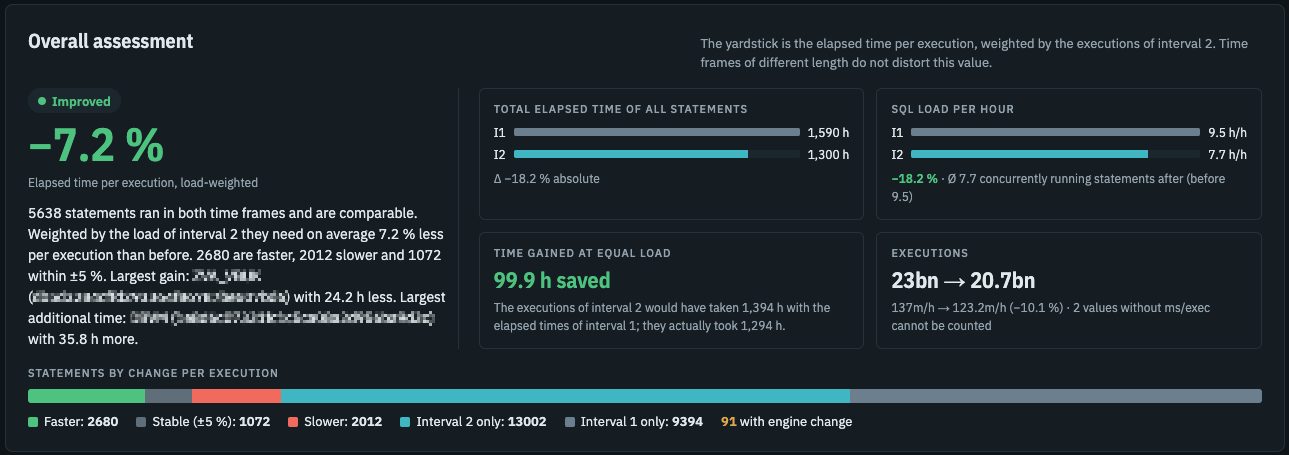
For comparison we used in this scenario one full week before and after the DB update. Overall you can see that the new HANA revision without any parameter changes and performance optimizations is faster. Does this mean, however, that we don’t need to worry about slower queries? No - because only the client knows which workloads are truly business-critical and which are not.
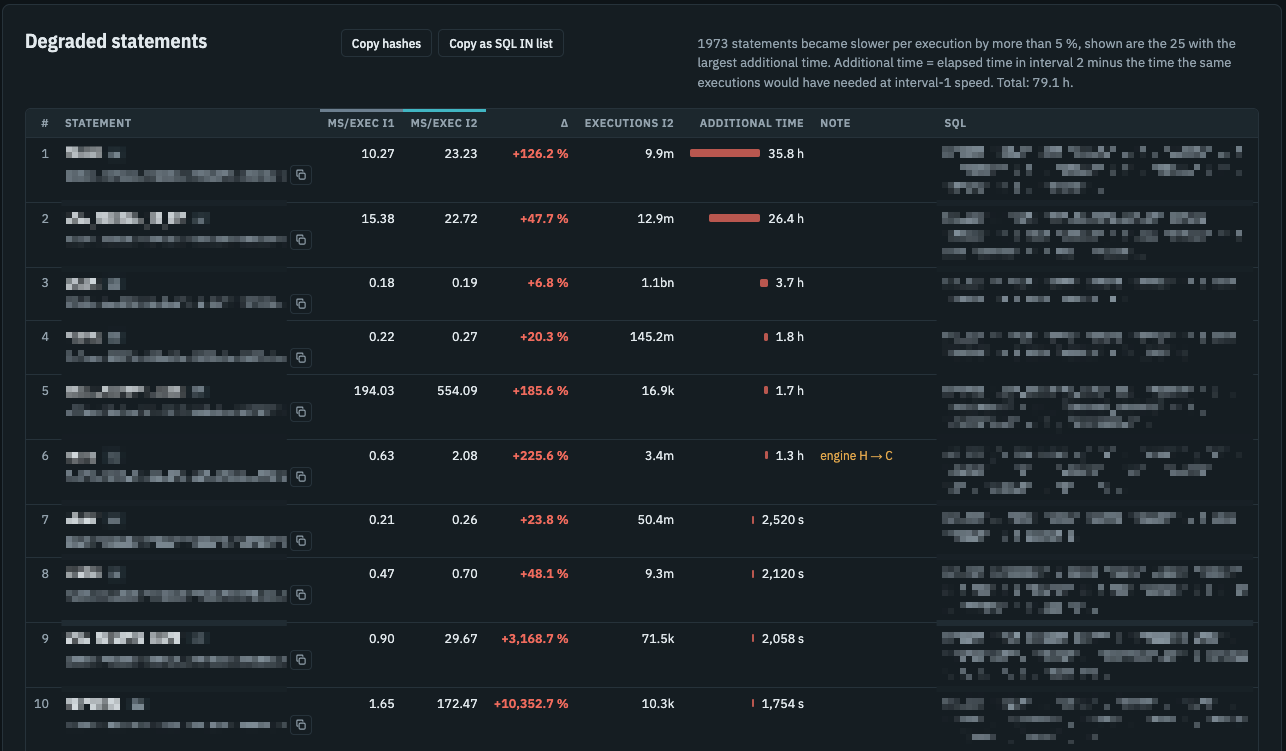
There are some degraded statements. In some of these cases, a change to the SQL engine is the root cause. The fallback to legacy engines is still present in the latest SPS08 revision. There are still limitations you cannot use the SQL engine HEX.
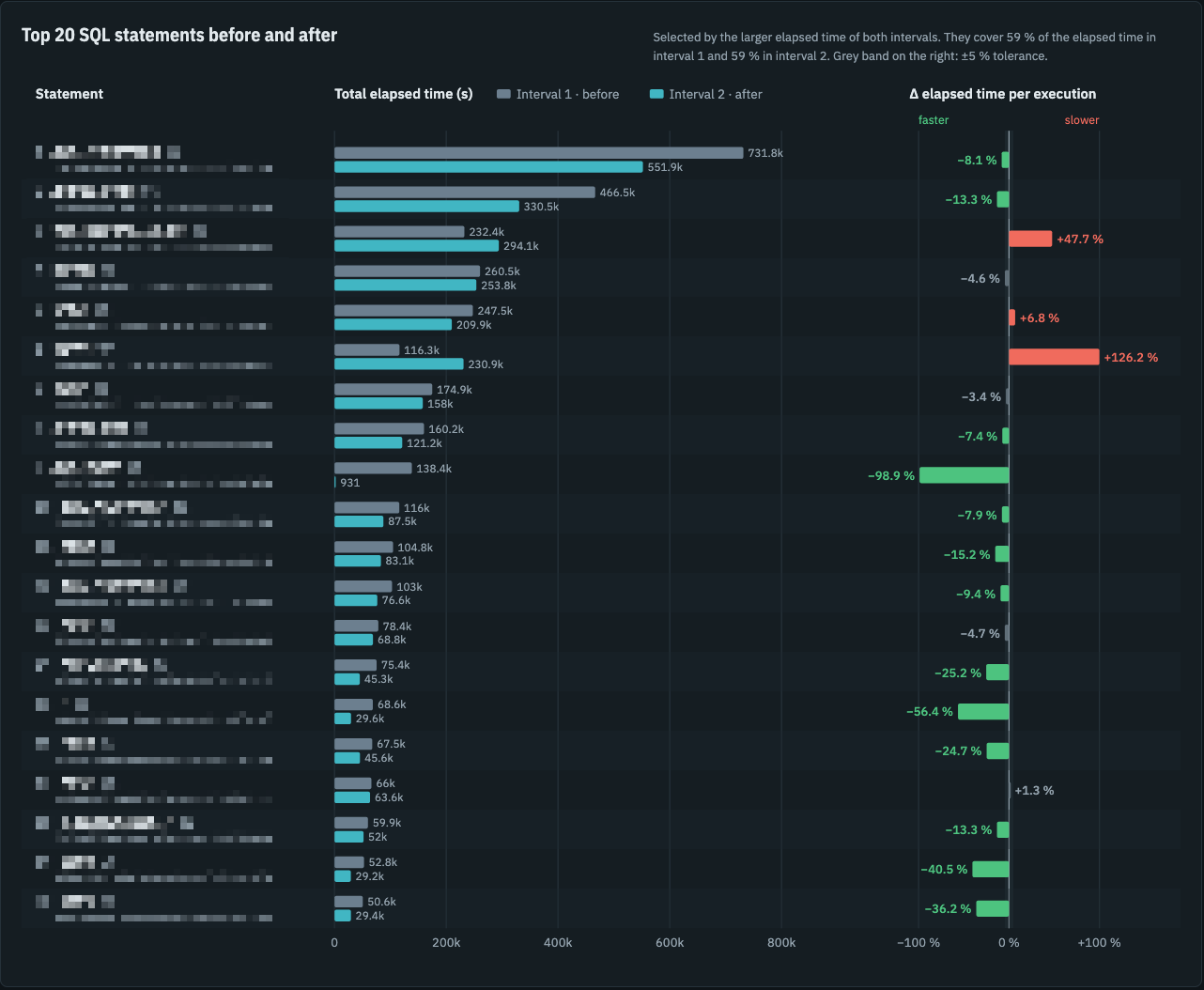
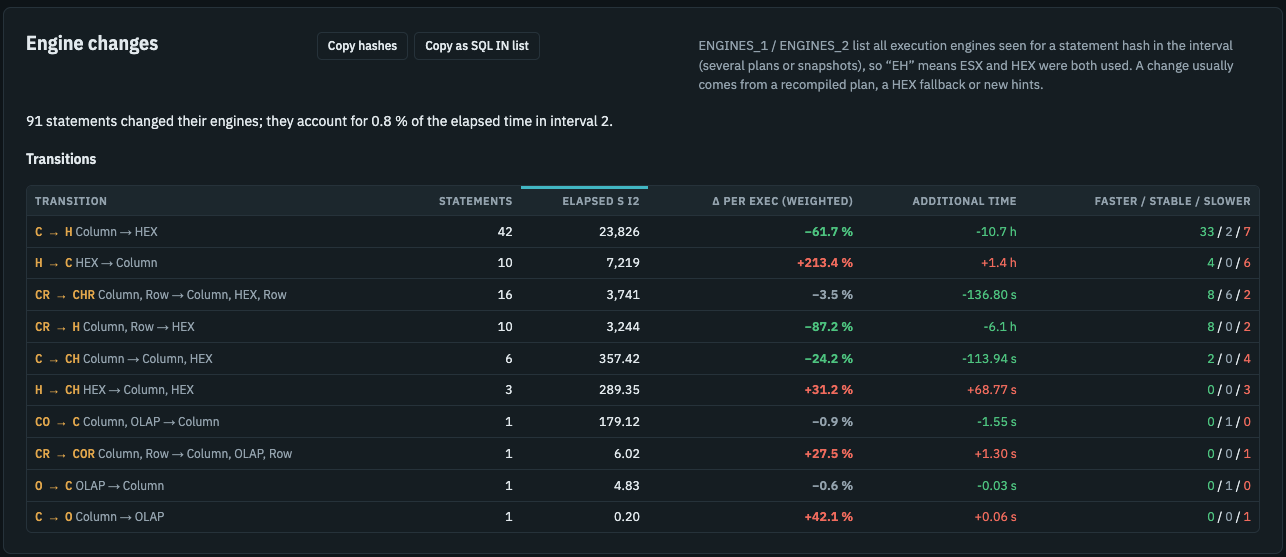
Even when the above reports looks quite good for the top statements we identified more than 20 business critical statements which we could improve.
The reasons?
- Mostly wrong engine
- high prepare times
- wrong buffering settings
- wrong HANA parameters
- missing single column indexes
9 of 20 changes are already in production and we can see the performance boost:
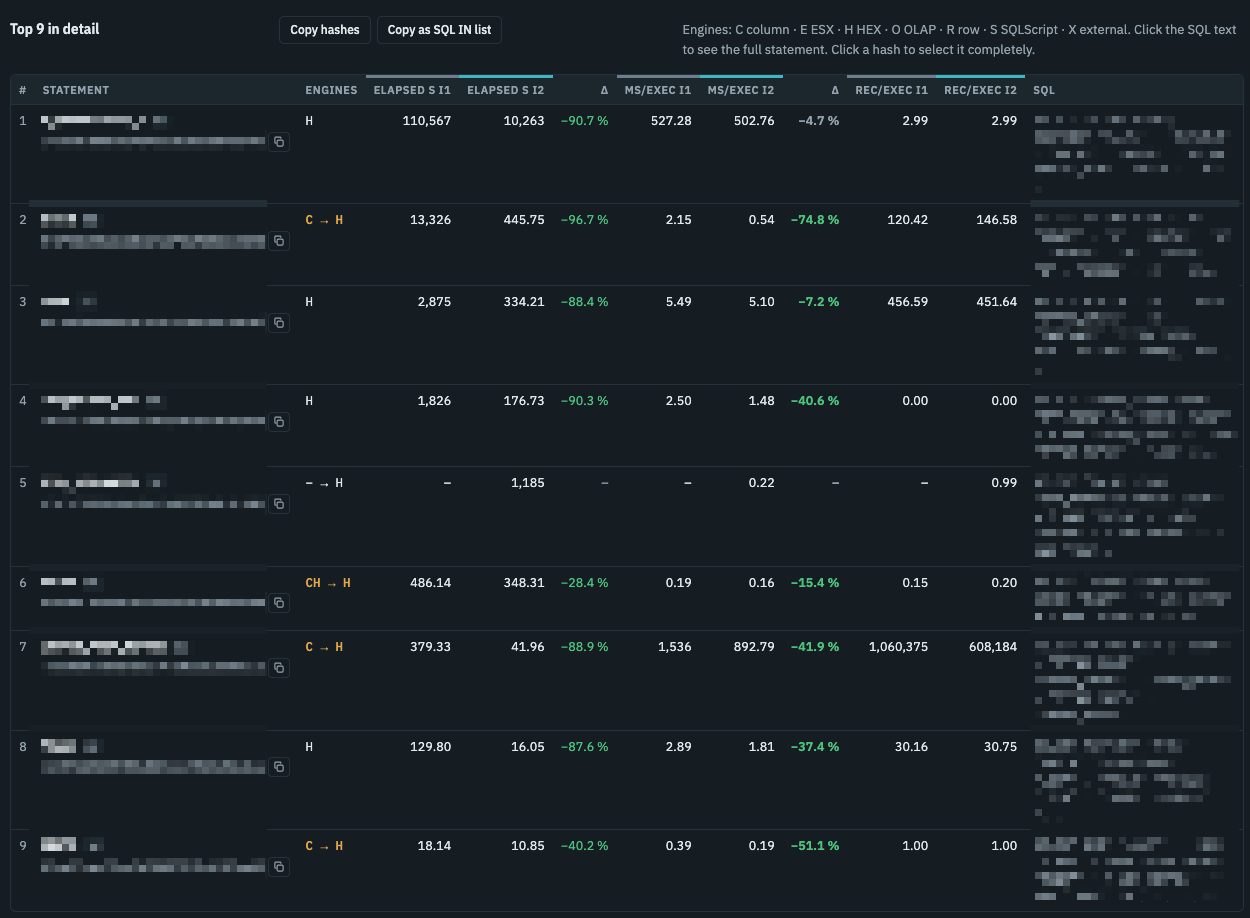
It is not just about having a basic understanding of how well SQL queries or various processes perform. It is far more important to know what is mission-critical for the company and at what response time issues begin to arise.
We are supporting with such health checks, hyper care and performance optimizations in all scenarios which are connected to HANA regardless if they are running in a SAP ERP cloud environment or on-premise. Please be aware: the performance tasks (incl. responsibility and analysis) are not covered within your RISE journey!
SAP HANA News by XLC