
HANA News Blog
SAP HANA 2.0 SPS08 Roadmap
The latest features of HANA 2.0 *updated*

The roadmap via Road Map Explorer was recently updated and some interesting features jumped into the spotlight. Some of them are already known because they are already implemented in HANA 4.0 (HANA Cloud). SAP HANA 2.0 SPS08 was released at the end of November 2024.
The interesting topics with important changes are: partitioning, data tiering (NSE), security, optimizer, backup and XSA. No, you won't hear any machine learning or AI features from me. If you really want and need them, because there are some, please go to Road Map Explorer :)
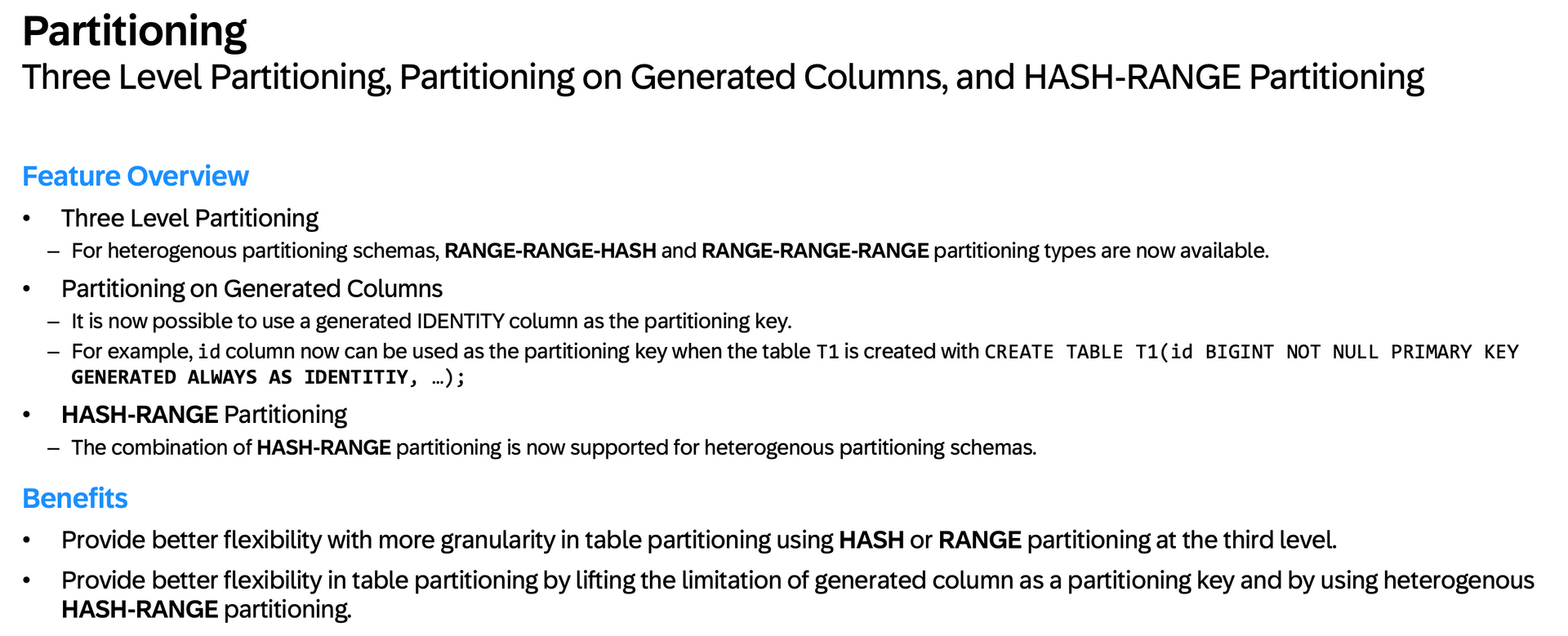
Partitioning
- Support for a generated column as a partitioning key
- Support for heterogeneous HASH-RANGE partitioning
=> currently HASH-RANGE was only possible for non-heterogeneous / homogeneous partitioning, so it was not possible to use the dynamic range interval option - a great one!
- Support heterogeneous partitioning into three levels for the following partitioning types:
- RANGE-RANGE-HASH
- RANGE-RANGE-RANGE
=> some of you may noticed that some monitoring views in SPS07 already containing some level 3 partition details
=> I'm curious to find a business case for this partition designs
© 2024 SAP SE or an SAP affiliate company. All rights reserved.
Data Tiering - NSE
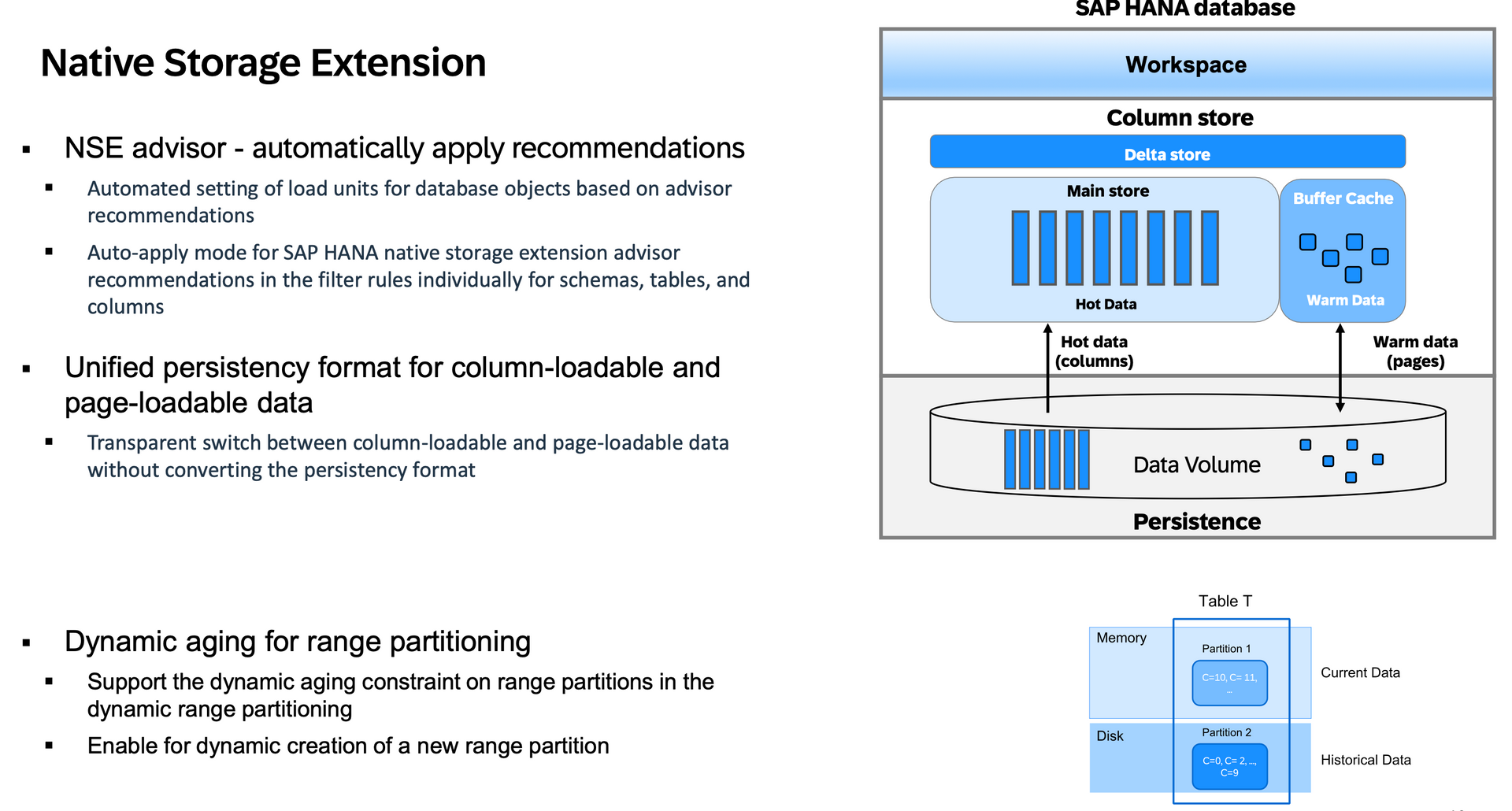
- Automatic setting of the minimum-required buffer cache size of the native storage extension, as per persistence size
- Calculate and set the UNLOAD_THRESHOLD parameter size of the buffer cache automatically based on the persistence size for data in SAP HANA native storage extension
=> SAP mean the parameter buffer_cache_cs - unload_threshold which is set by default to 80 (%)
=> Currently I don't know if this feature helps customers to size the buffer cache properly
- Dynamic aging for range partitions to native storage extension
- Enable for dynamic creation of a new range partition, assignment of the load unit "page-loadable" to all range partitions with a certain distance to the new partition
=> I'm really excited to test this feature, because it will make the life of a DBA easier, if you are using NSE on partition level
- Provide a transparent switch between column-loadable and page-loadable data without converting the persistency format
- Significantly reduce conversion time between page-loadable and column-loadable data and, thereby, reduce business downtime and greatly simplify administration for native storage extension
=> this will make the implementation of NSE faster and easier due to lower downtimes - great feature!
© 2024 SAP SE or an SAP affiliate company. All rights reserved.
Optimizer
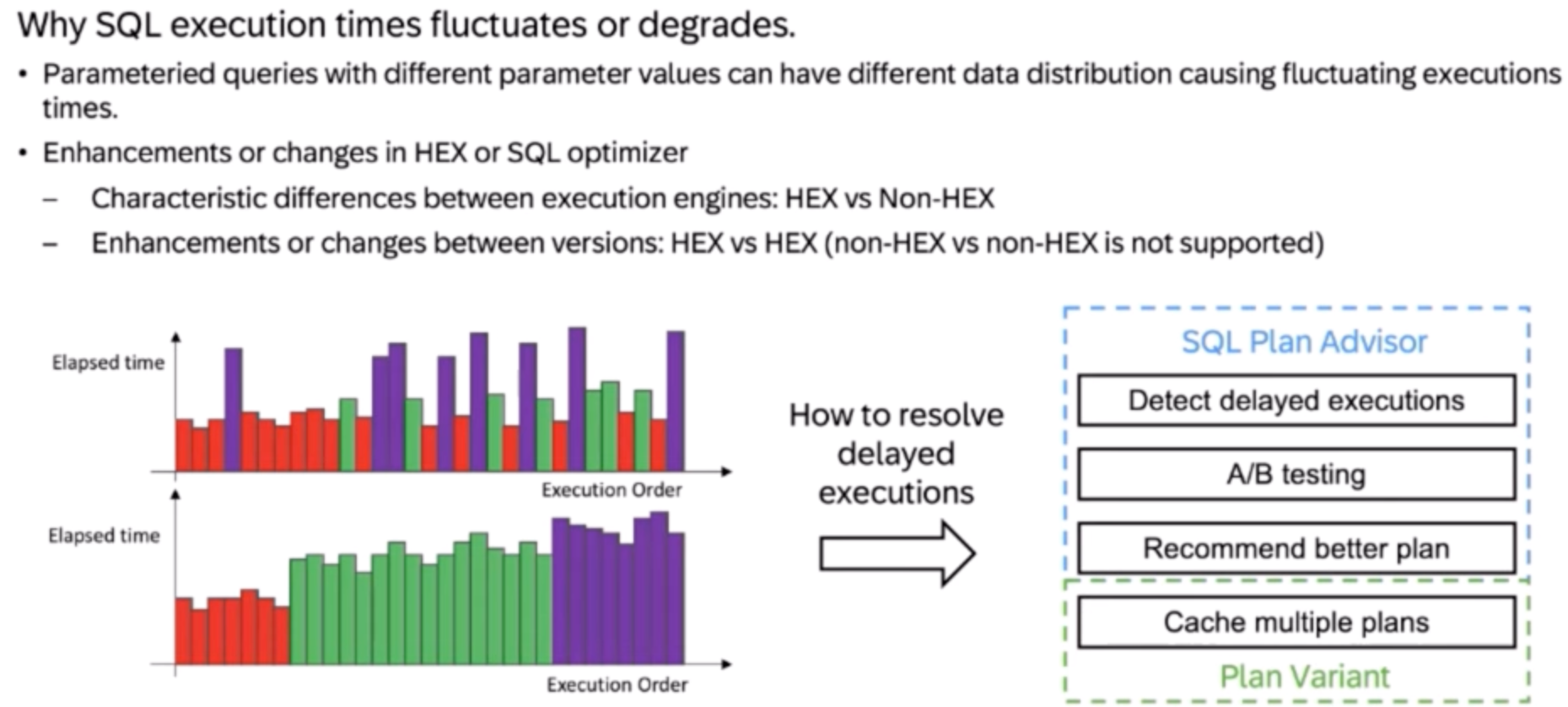
- Cache different SQL execution plans based on parameter values that cause variant SQL execution plans for HEX
=> this one of my most anticipated feature, because the HEX or more precise the optimizer made a lot of trouble in the past due to switching engines and the eviction of HEX plans
=> to be able to use multiple plans at a time depending on the bind variables can be a game changer in terms of performance using the HEX
=> this feature is already available since Q2 of 2024 for HANA Cloud named as SQL Plan Advisor
Source: Youtube: What’s New in SAP HANA Cloud | June 2024 | Susen Poppe and Product Experts
Security
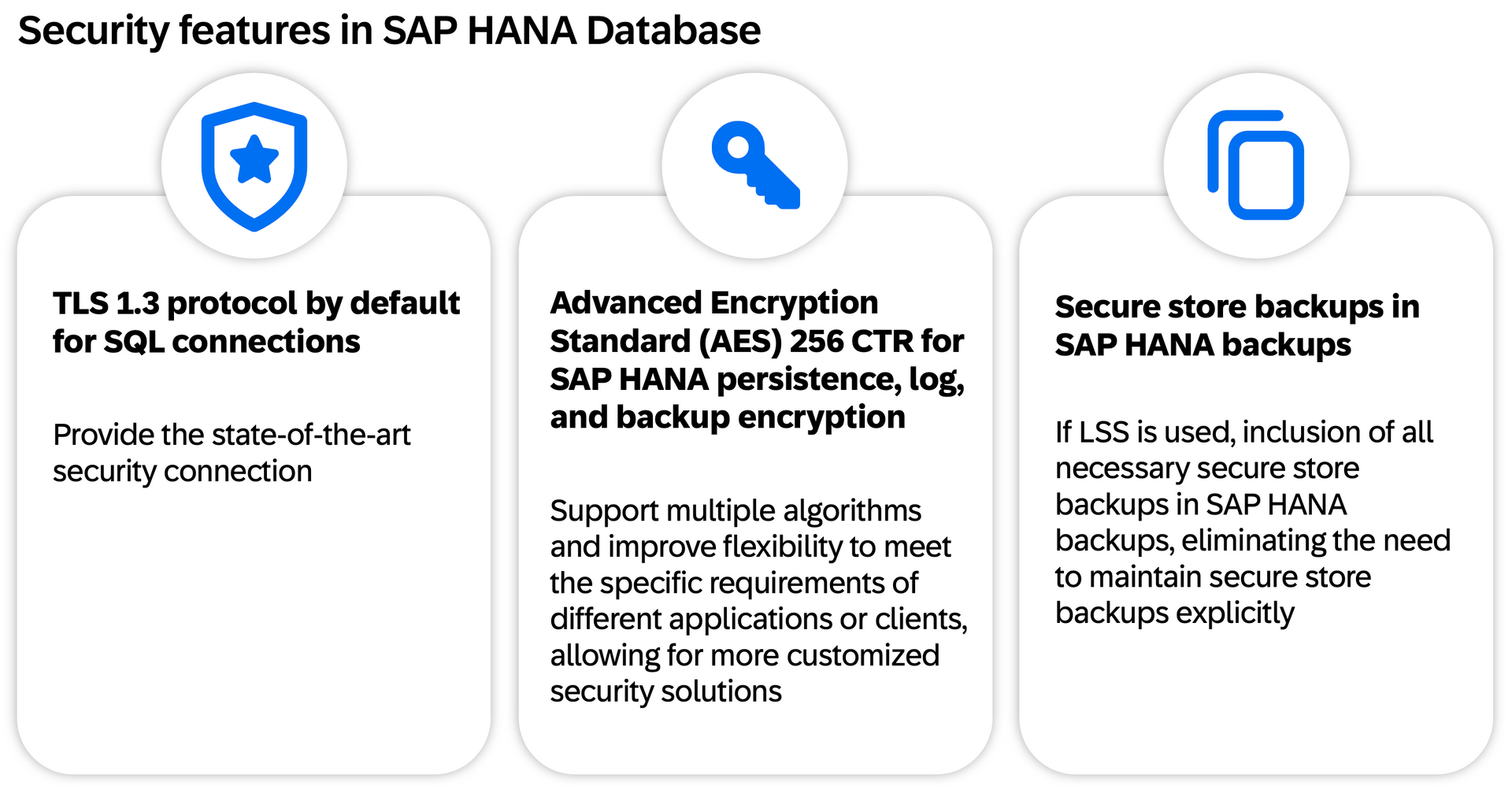
- Extend support for persistence, log, and backup encryption algorithms to AES 256 CTR
- Activate TLS version 1.3 protocol by default for SQL connections for SAP HANA version 2.0 SPS 08
- IP-based connect restriction for user groups: Ability to limit access for all users or parts of the user base, for instance, to enable only administrators to log in from the company’s IP range
=> Activating TLS 1.3 by default can create some trouble for some customers, but the implementation was more than necessary after this long time
=> the IP-based connect restriction allows to implement a SoD (Segregation of duties) concepts or helps to isolate instances
© 2024 SAP SE or an SAP affiliate company. All rights reserved.
XSA
- Improve setup of SAP HANA, extended application services, advanced model behind a reverse proxy
- Make the solution more robust, especially during system replication takeover, as functionality of the internal system is not dependent on the external route and internal requests are “short-circuited”
- Enable users to log in from external and internal software
- Separate networks and DNS zones of external and internal domains
- Hide internal back-end ports from public access by exposing the external app end points only (for example, to the public Internet) using reverse proxies
=> I'm waiting for such a feature for the "normal" HANA not only for XSA
Backup
- Setting local secure store (LSS) as the default secure store
- If LSS is used, inclusion of all necessary secure store backups in SAP HANA backups, eliminating the need to maintain secure store backups explicitly
=> to set LSS as default can also create some trouble and should be implemented carefully
At the end really useful features. I hope that they implement some new monitoring views for NSE and partitioning - otherwise we (XLC) can implement our own solution to get the needed information collected in own history views for our customers. Due to the lack of events around the topic HANA it was not possible to provide the needed feedback for so many customers. The consequence? A lot of missing features which SAP is not aware of. Yes, there is an idea/influence page but without enough votes you can not reach your goal even if the idea is brilliant, because SAP is not aware of the need.
SAP HANA News by XLC